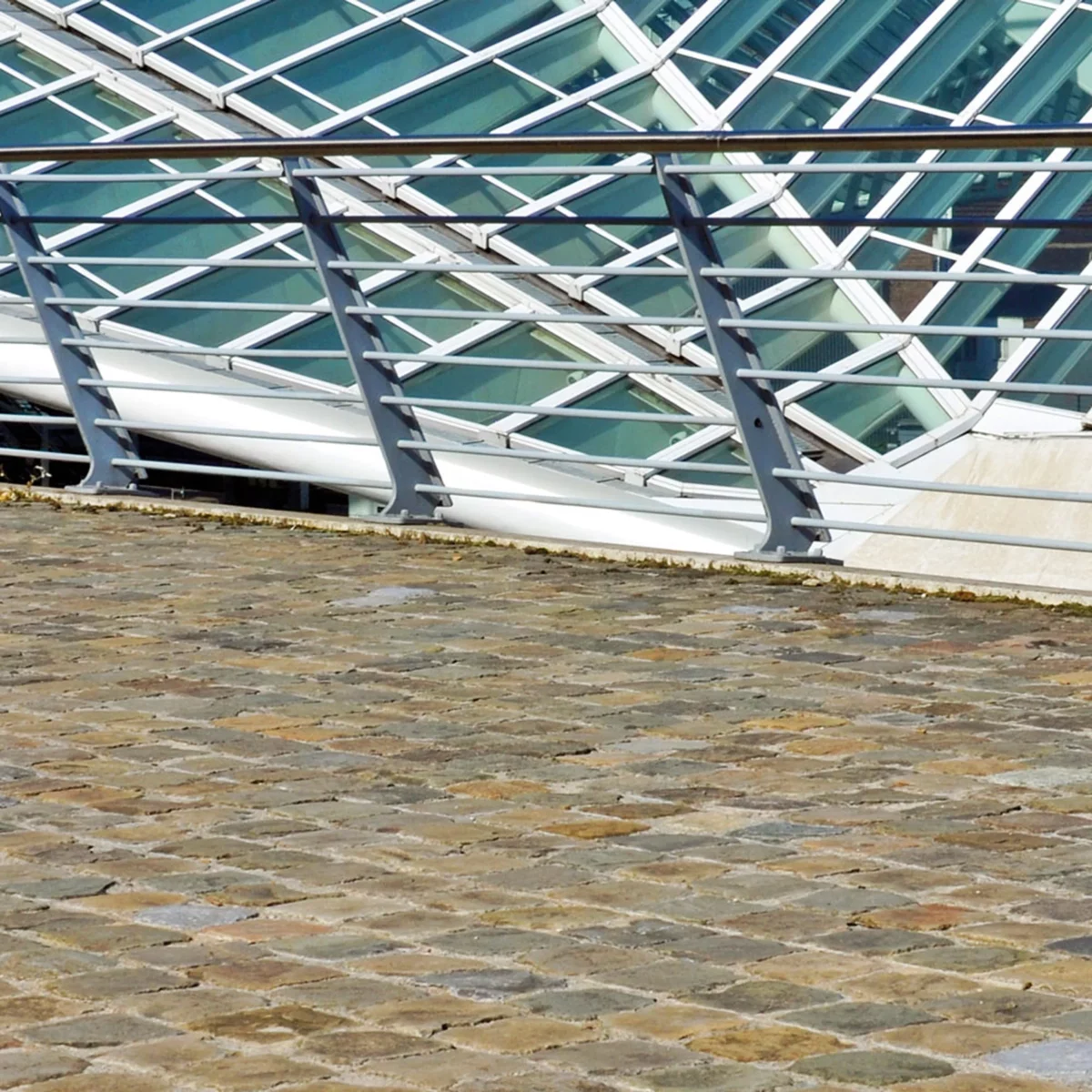
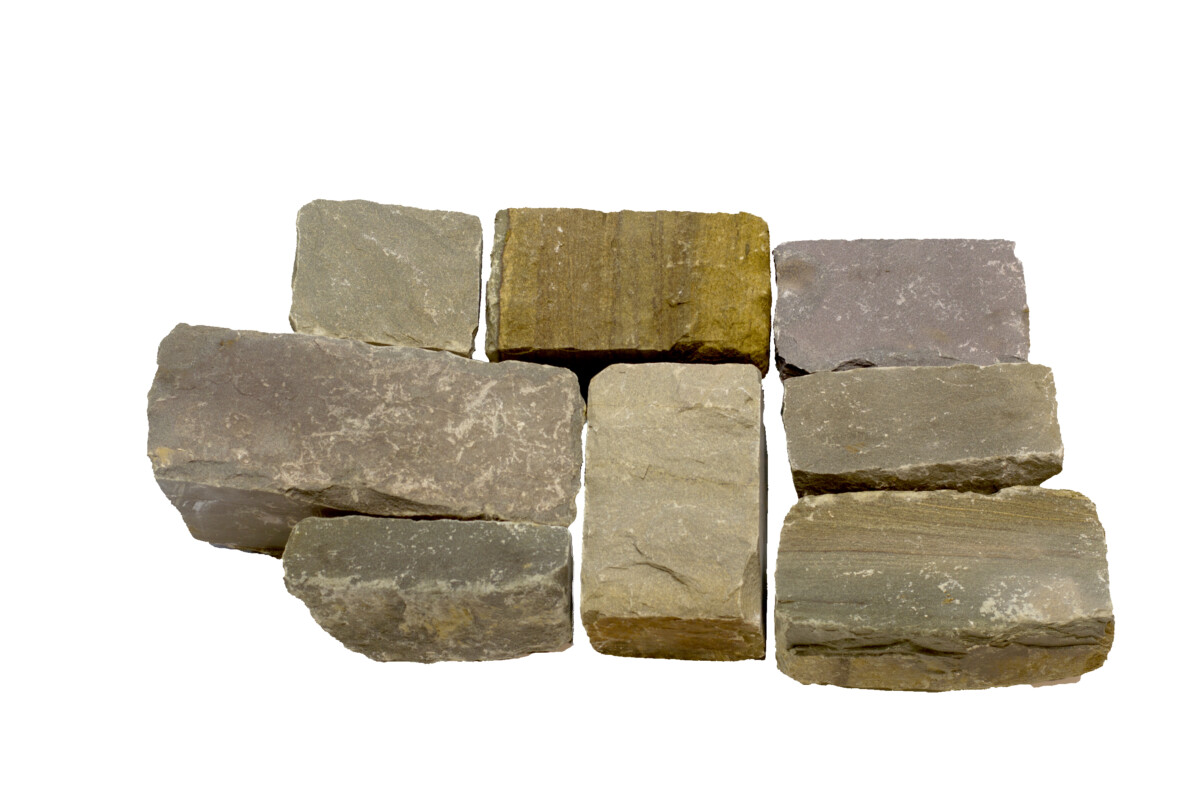
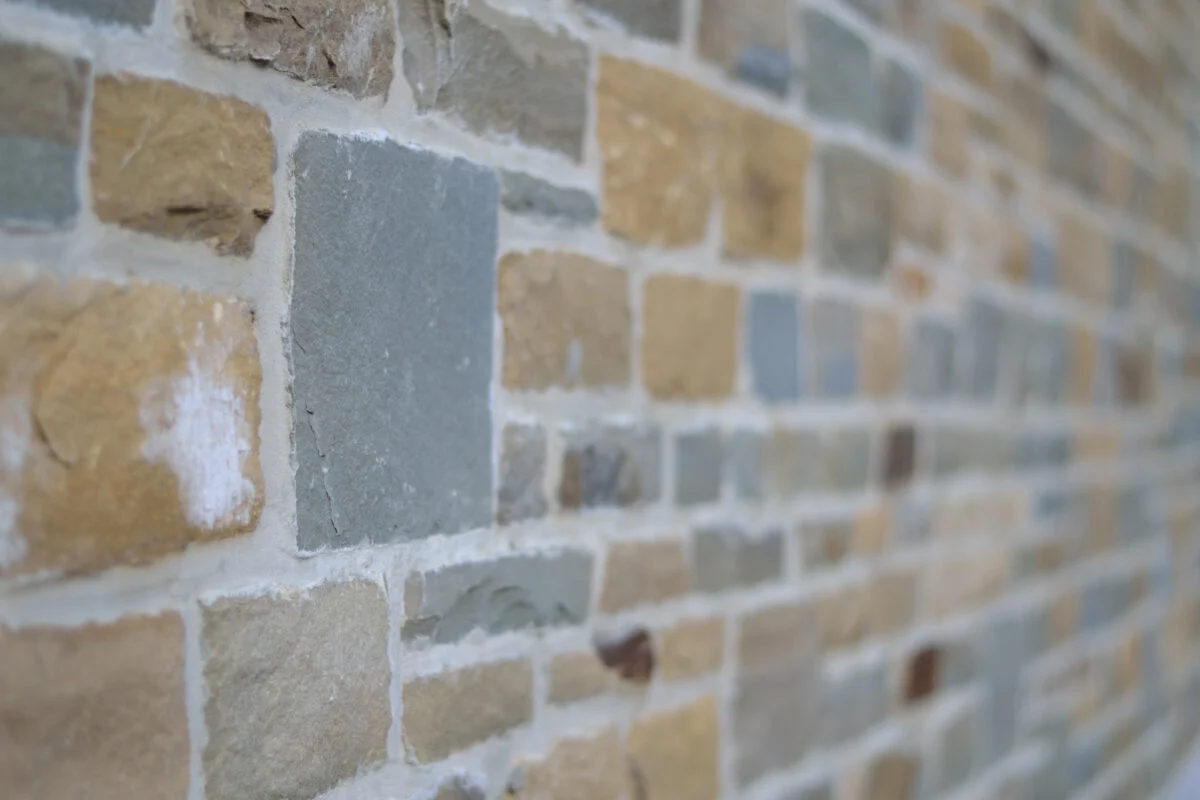
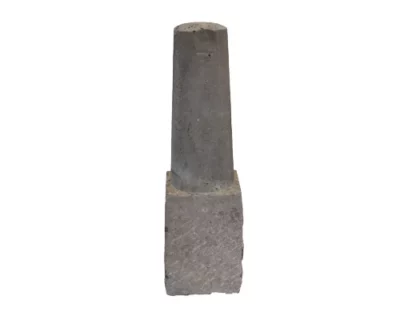
Squared Rubble Stone (Condroz Sandstone)
- Facades
- Low walls
Facades, garden walls, garden decoration
Designation:
Condroz sandstone, hard sandstone, Condroz psammite, Meuse sandstone, Famennian sandstone.
Origin:
Belgium, Province of Liège and Namur: valleys of the Amblève, Bocq, Hoyoux, Ourthe and Samson.
Description:
Slightly micaceous clayey sandstone, fine-grained, of upper Famennian stratigraphic age (Upper Devonian, Primary).
Appearance:
Sandstone deposits come in an extremely varied range, with brighter hues (yellow, green, red, rusty brown) or more muted tones (from greenish gray to bluish gray, wine lees, ochre, beige). The stone develops a rusty brown patina when rich in iron, and grayish blue or greenish tones when rich in feldspars. While the visible face of the rubble stone will always be cleaved (natural), certain sides may present a sawn surface.
Hues may vary depending on quarry extraction.
Applications:
Sandstones lend themselves admirably to the production of all types of rubble stone, steps, coping, corners, quoins, facing stone, for both exterior and interior use. Cleaved on the surface, the rubble stone is then rectified to give it its final finish: rough, recut, retrimmed or squared. Naturally slip-resistant, sandstone is also recommended for ground surfacing: paving stones, slabs, flagstones, edging.
Tolerance applicable from the limits of the nominal dimension ranges (min. and max.): 1 cm
Ajouter au devis
-
Moellons équarris en Grès du Condroz -
moellon grès équarris
Autres produits de la catégorie "Facades"
Other products
Randomly selected products