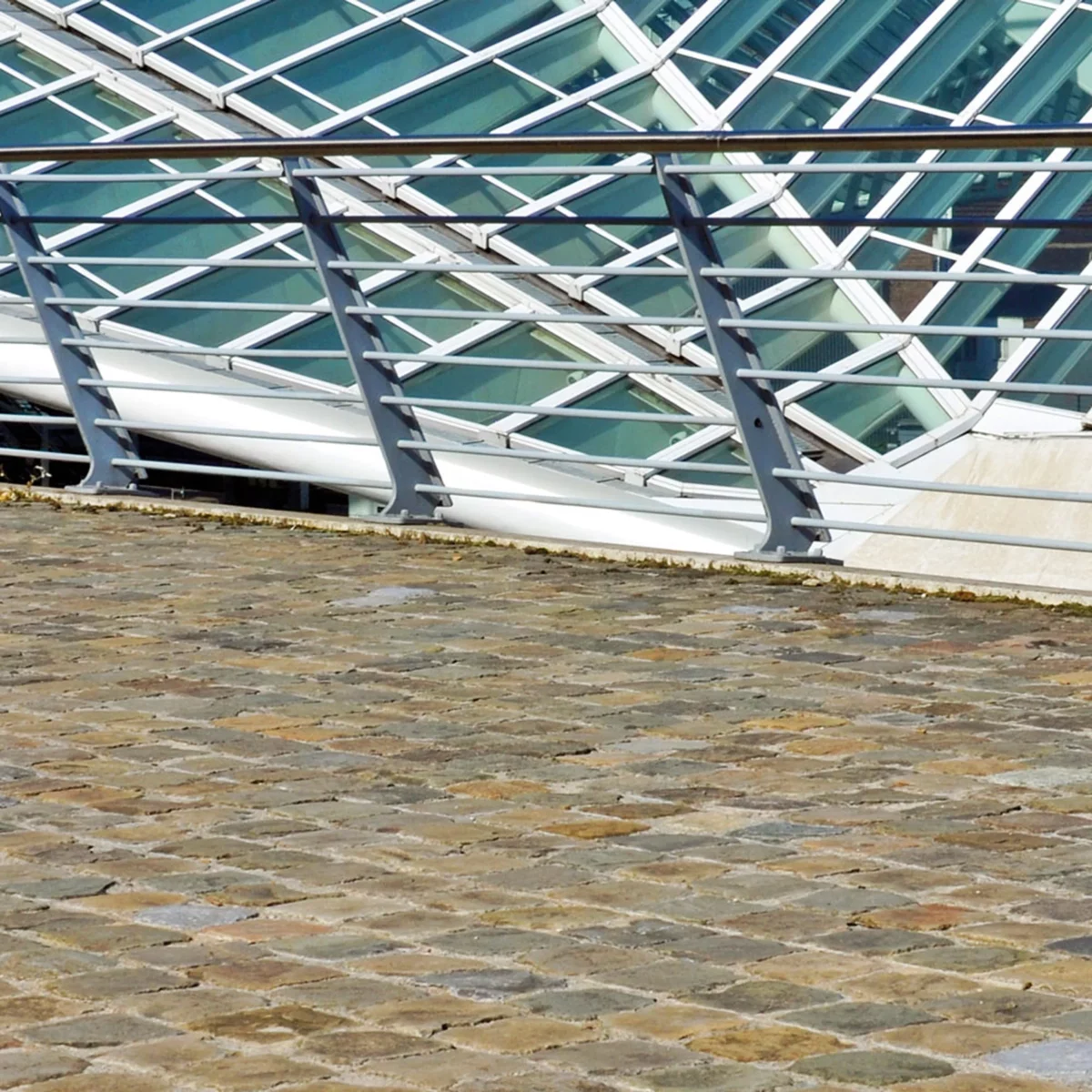
Square Pavers (Belgian Sandstone)
- Garden decoration
Facades, garden walls, garden decoration
New Belgian Sandstone Pavers Description
Denomination:
Condroz Sandstone – Hard Sandstone – Condroz Psammite – Meuse Sandstone – Famennian Sandstone.
Origin:
Belgium, Provinces of Liège and Namur: Amblève, Bocq, Hoyoux, Ourthe, and Samson valleys.
Description:
Slightly micaceous, fine-grained argillaceous sandstone, from the Upper Famennian stratigraphic age (Upper Devonian, Paleozoic).
Appearance:
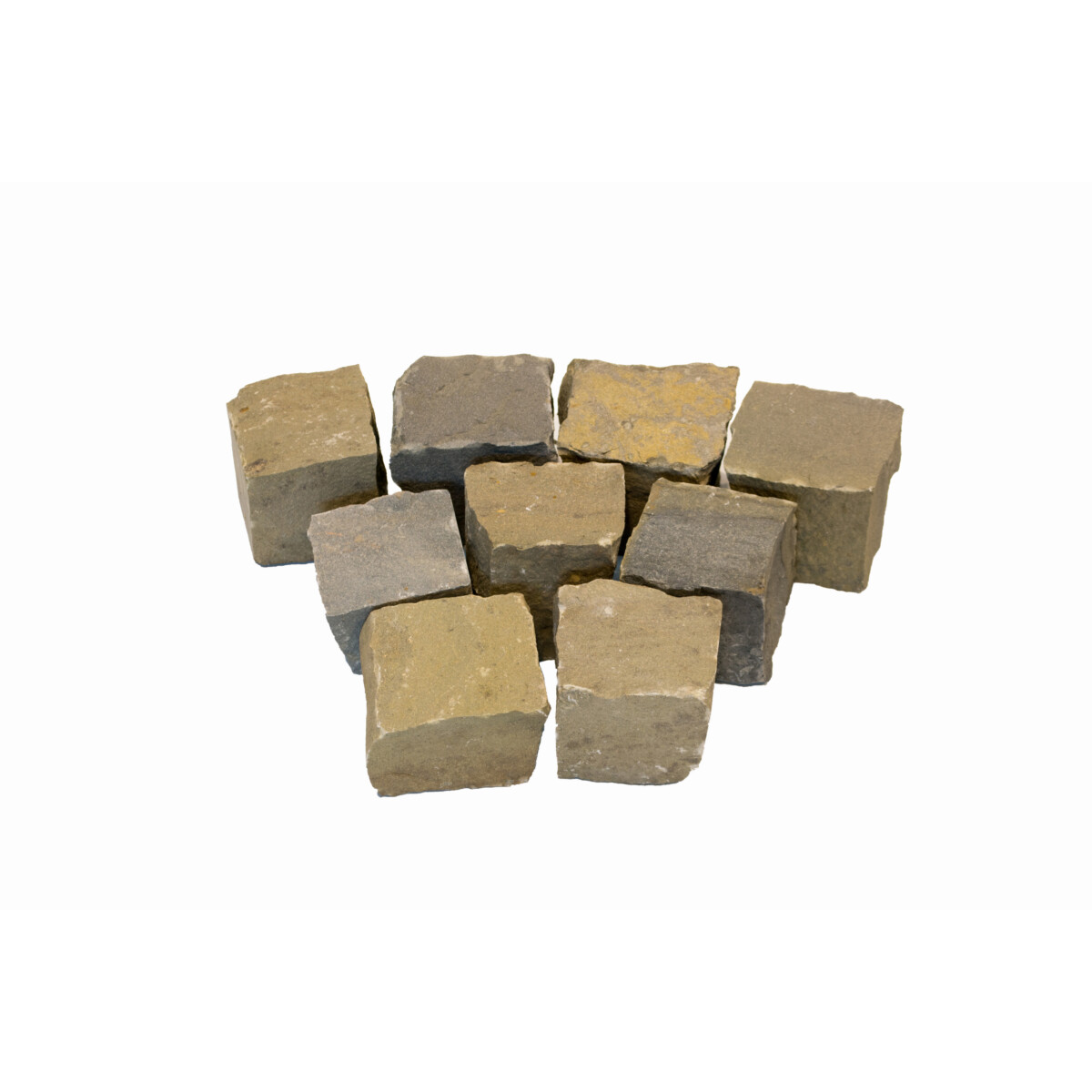
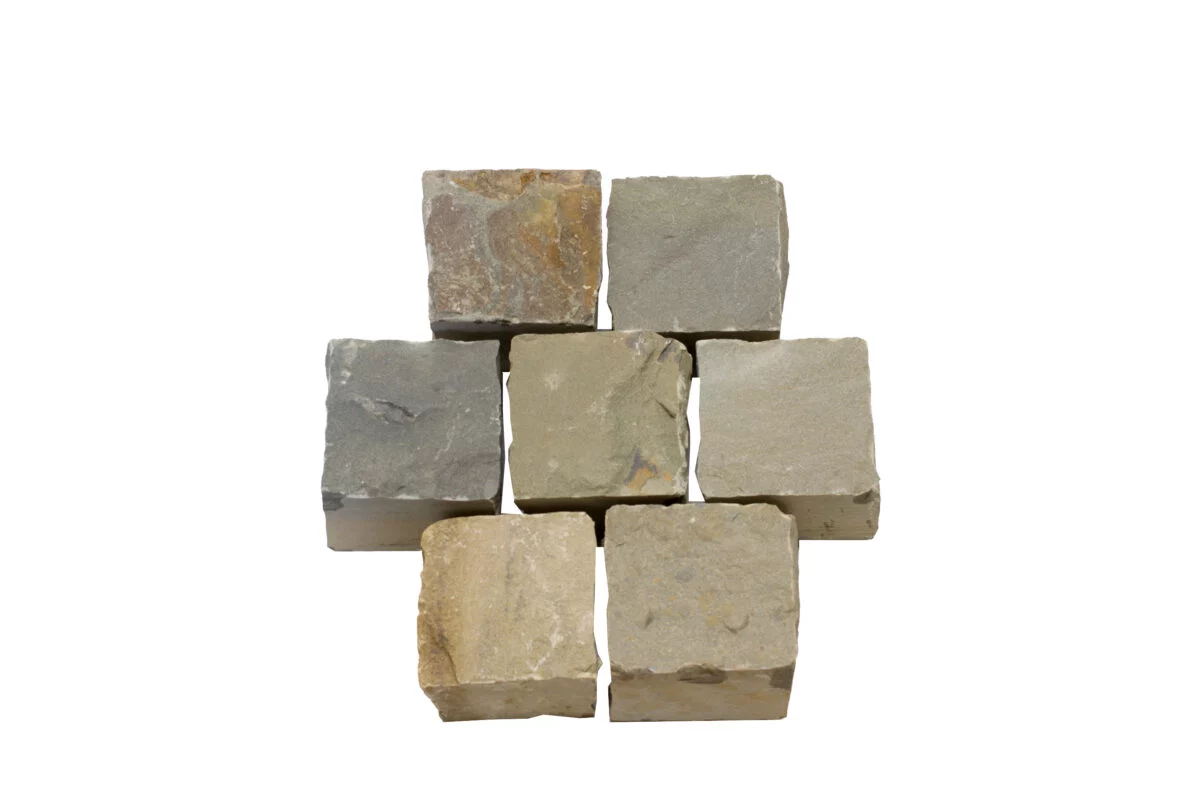
Sandstone deposits come in an extremely wide range of colors, with brighter shades (yellow, green, red, rusty brown) or more muted tones (from grey-green to grey-blue, wine-red, ochre, beige). The stone develops a patina of rusty brown when rich in iron, and grey-blue or greenish tones when rich in feldspar. While the visible face of the paver will always be cleaved (natural), two of the sides may feature a sawn surface.
Shades may vary depending on the extraction area of the deposit.
Variants:
• mosaics: 70 x 100 mm
• squares: 150 x 150 mm
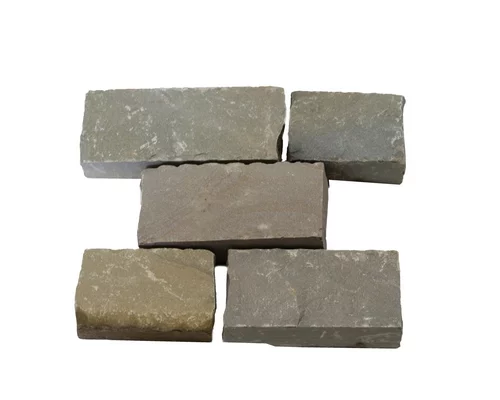
• rectangles: 150 x 200 mm
Applications:
Sandstones are perfectly suited for the production of all types of rubble stone, steps, wall copings, corners, quoin stones, and facing stones, for both exterior and interior use. Cleaved on the surface, the rubble stone is then rectified to give it its final finish: rough, recut, trimmed, or squared. Naturally non-slip, sandstone is also recommended for flooring: pavers, setts, slabs, and curbs.
Tolerance applicable from the limits of the nominal dimension ranges (min and max): 1 cm
Ajouter au devis
-
-
Pavés Grès Condroz -
Pavés Grès Condroz
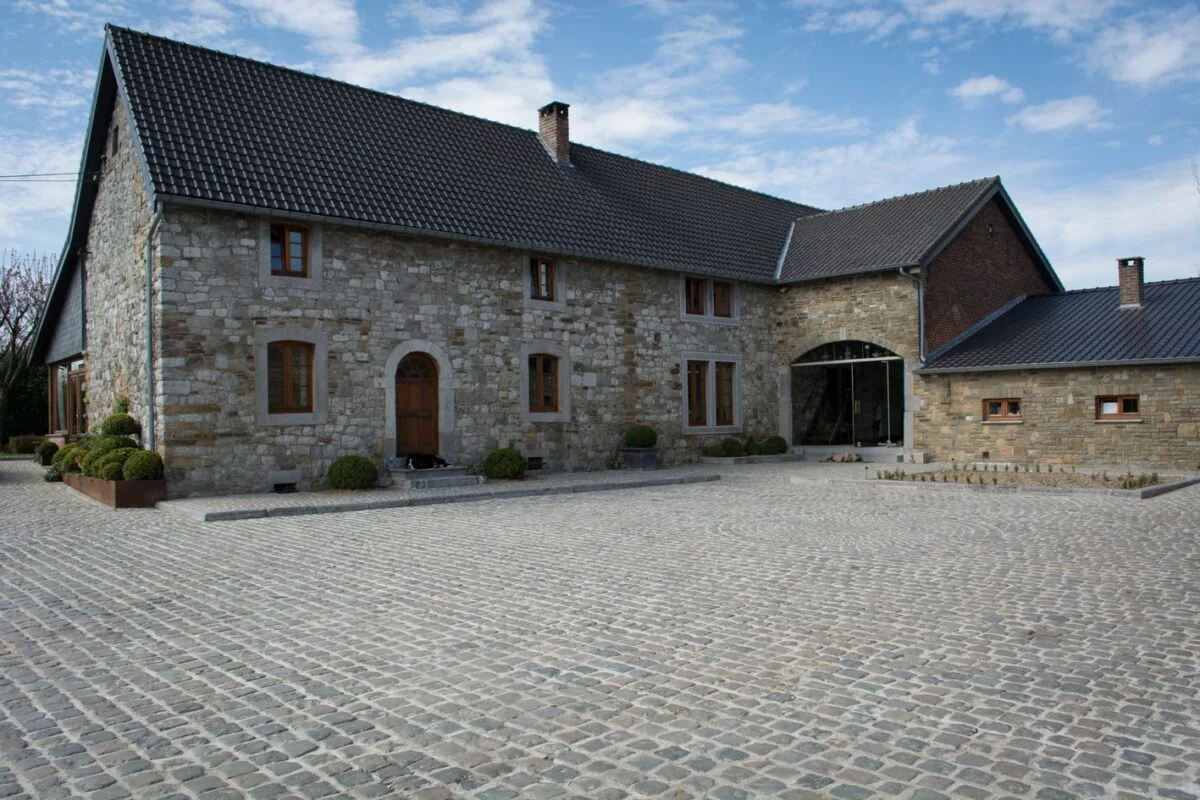
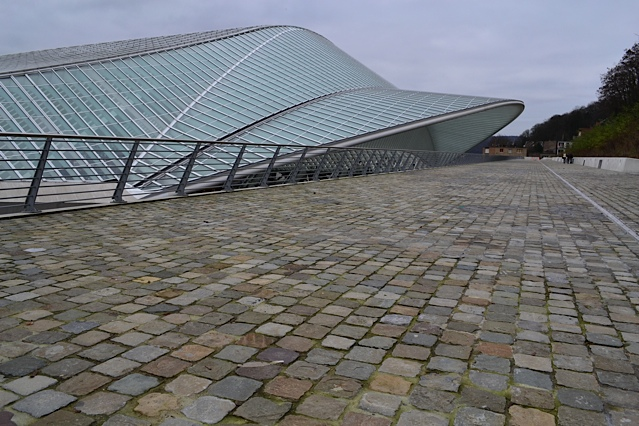
Mises en situations
Autres produits de la catégorie "Garden decoration"
Other products
Randomly selected products