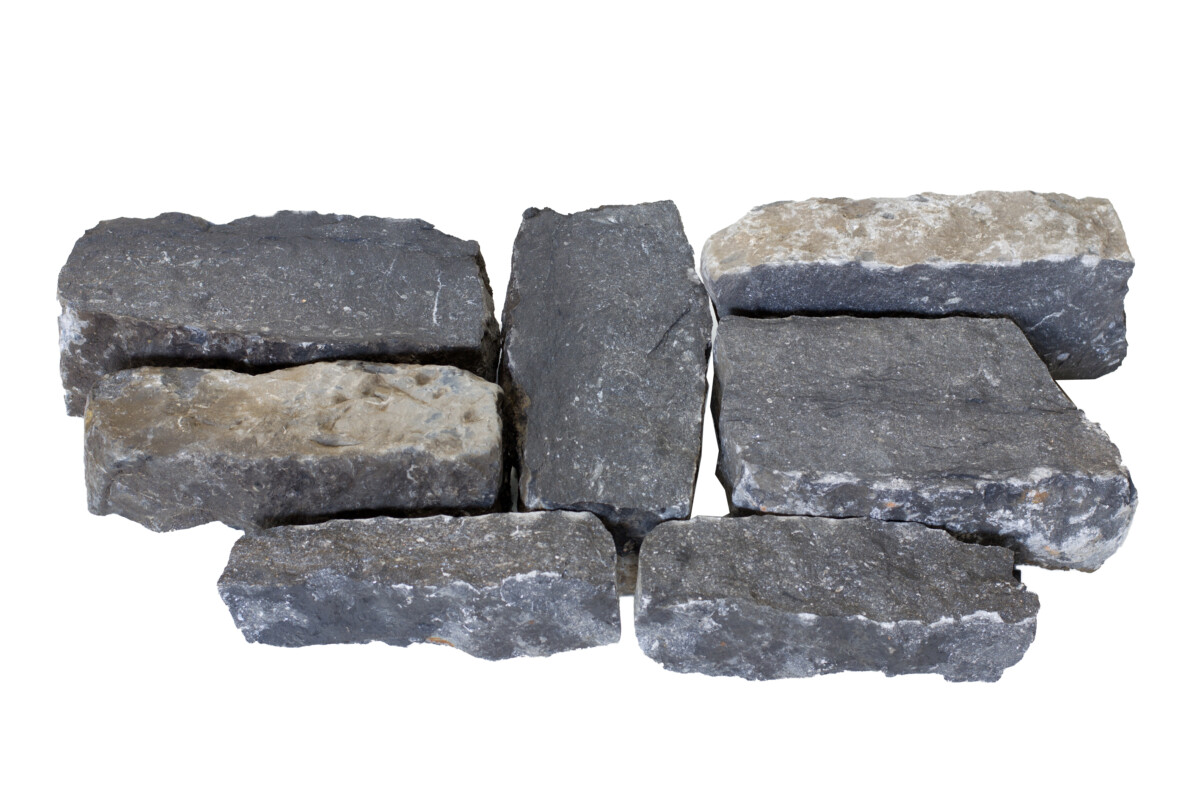
Recut Rubble from Reclaimed Stone (Blue Stone)
- Facades
- Low walls
Facades, garden walls, garden decoration
Designation:
Petit Granit; Blue stone; Crinoidal limestone
Origin:
Belgium, the Soignies, Ourthe-Amblève, Condroz and Bocq basins. Provinces of Hainaut, Liège and Namur.
Description:
Compact crinoidal limestone with a grey-blue hue, of Upper Tournaisian stratigraphic age.
Appearance:
Whether cleft or patinated, the stone displays colour variations depending on the size of the crinoid remains and the abundance of the binder. The stone contains white veins and fossils. The fossils give fresh breaks sparkling facets in the light. Crinoids, corals and shells appear light against a dark background that varies, depending on the finish, from light grey to black, with bluish tones in between. The stone lightens when exposed to the elements, due to superficial leaching of the interbedded carbon. While the visible face of the rubble stone will always be cleft (natural), some sides may have a sawn surface.
The general appearance and shades may vary depending on the batch
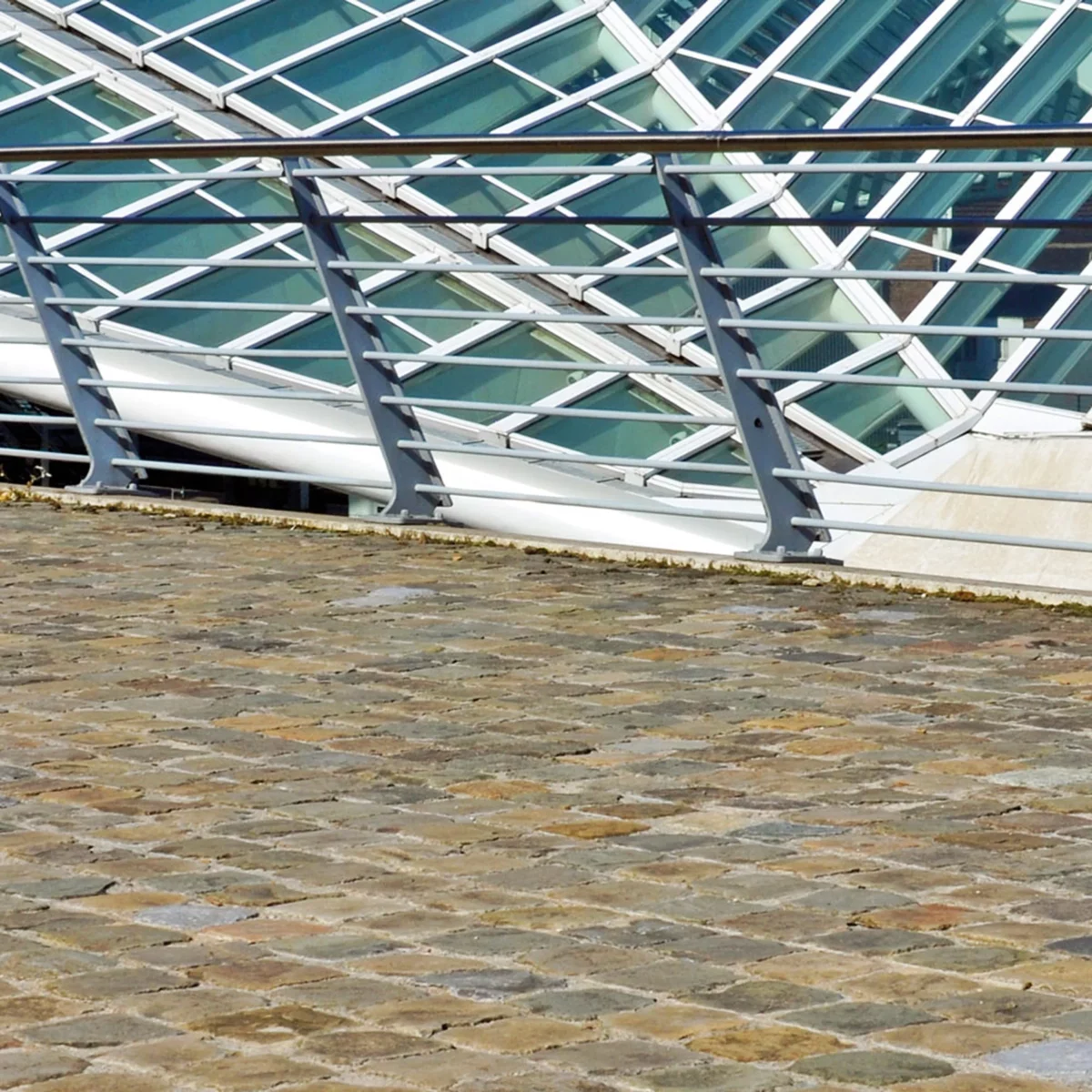
Some stones may show black spots (see photo above).
Applications:
Highly valued for the fact that it is available in many formats and finishes, blue stone is used both indoors and outdoors: façade cladding, window and door surrounds, flooring, etc.
Tolerance applicable from the limits of the nominal dimension ranges (min. and max.): 1 cm
Ajouter au devis
-
Moellons recoupés hors d'anciennes pierres, pierre bleue
Autres produits de la catégorie "Facades"
Other products
Randomly selected products